
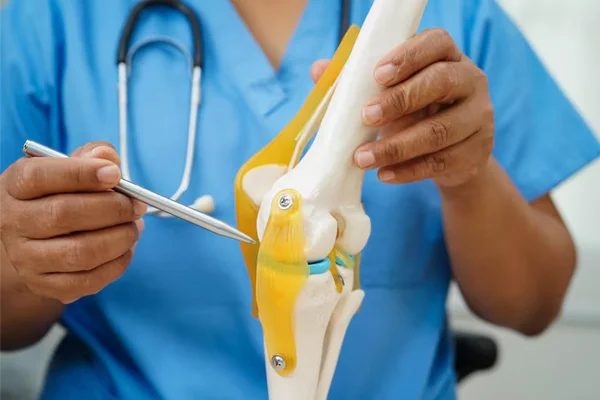
Persistent joint pain, stiffness, and difficulty walking can significantly affect everyday life. When severe arthritis, joint degeneration, or previous injury causes substantial damage to a joint, joint replacement surgery in Uttam Nagar may be considered after a detailed orthopaedic evaluation. Dr. Ranjeev Joshi provides personalised consultation and treatment guidance for patients experiencing advanced joint problems.
Joint replacement is a surgical procedure in which damaged portions of a joint are replaced with artificial components. The objective is to reduce pain, improve joint function, and support better mobility. The decision to undergo surgery depends on several factors, including the severity of joint damage, symptoms, functional limitations, overall health, and response to non-surgical treatment.
Joint replacement surgery involves removing damaged surfaces of a joint and replacing them with specially designed artificial components. It is most commonly performed for the knee and hip, although other joints may also require replacement in selected cases.
Severe osteoarthritis is one of the common reasons for joint replacement. Joint damage may also result from certain injuries, inflammatory arthritis, or other degenerative conditions.
Before recommending surgery, an orthopaedic specialist evaluates symptoms, examines the affected joint, reviews medical history, and may recommend imaging or other investigations to understand the extent of damage.
Joint replacement may be considered when joint damage becomes severe and begins to interfere significantly with daily activities.
Common signs that may require an orthopaedic evaluation include:
Persistent knee or hip pain
Pain while walking or climbing stairs
Significant joint stiffness
Difficulty performing routine activities
Reduced range of movement
Joint pain that affects sleep
Persistent symptoms despite conservative treatment
Advanced joint degeneration visible on imaging
Not every patient with arthritis requires replacement surgery. Depending on the condition, non-surgical treatment may continue to be appropriate.
The knee is one of the most commonly affected joints in people with advanced osteoarthritis. Progressive cartilage damage can cause pain, stiffness, swelling, and reduced mobility.
Knee replacement surgery involves replacing damaged portions of the knee joint with artificial components. It may be considered when severe knee arthritis causes substantial pain and functional limitations.
Dr. Ranjeev Joshi evaluates the patient's symptoms and joint condition before discussing whether knee replacement is an appropriate option. Patients are also informed about the expected treatment process, recovery, rehabilitation, and precautions.
Hip arthritis and other forms of severe hip joint damage can cause pain in the hip, groin, thigh, or surrounding areas. Patients may also experience difficulty walking, bending, sitting, or performing routine activities.
Hip replacement surgery replaces damaged portions of the hip joint with artificial components. It may help suitable patients reduce pain and improve functional movement.
A detailed assessment is important before deciding on surgery because hip pain can have several possible causes.
For appropriately selected patients, joint replacement can provide several potential benefits, including:
Reduction in severe joint pain
Improved mobility
Better ability to perform daily activities
Improved joint function
Greater independence in routine movement
Potential improvement in overall quality of life
The results of surgery vary from person to person and depend on factors such as overall health, joint condition, rehabilitation, and adherence to medical advice.
The journey generally begins with a detailed consultation. Dr. Ranjeev Joshi evaluates the patient's symptoms, medical history, physical condition, and available diagnostic reports.
If surgery is being considered, additional investigations may be advised to assess the joint and the patient's fitness for the procedure.
The treatment process generally includes:
1. Orthopaedic Evaluation
The affected joint is examined and symptoms are assessed.
2. Diagnostic Assessment
Imaging and other relevant investigations may be recommended to determine the extent of joint damage.
3. Treatment Planning
Available non-surgical and surgical options are discussed according to the patient's condition.
4. Surgical Procedure
If replacement is recommended, the damaged joint surfaces are replaced with suitable artificial components.
5. Rehabilitation
Post-operative exercises and rehabilitation play an important role in restoring movement and strength.
Recovery varies depending on the type of joint replacement, the patient's general health, and other individual factors. Rehabilitation and physiotherapy may be recommended to help improve strength, flexibility, balance, and movement.
Patients are generally advised to follow their surgeon's instructions regarding exercises, medications, wound care, activity levels, and follow-up appointments.
Gradually increasing activity under professional guidance can support recovery while reducing the risk of unnecessary strain on the operated joint.
Patients considering joint replacement surgery in Uttam Nagar can consult Dr. Ranjeev Joshi for a detailed evaluation and personalised treatment guidance.
His approach focuses on understanding the patient's symptoms, lifestyle, functional requirements, and overall health before recommending treatment. Patients are guided about both conservative and surgical options so that they can make informed decisions about their orthopaedic care.
The clinic is conveniently located in Uttam Nagar, Delhi, making it accessible for patients from nearby areas including Dwarka, Janakpuri, Vikaspuri, Tilak Nagar, and other parts of West Delhi.
Joint replacement may be considered for patients with severe joint damage, advanced arthritis, or significant functional limitations when appropriate non-surgical treatments no longer provide adequate relief.
No. Knee and hip replacements are among the most common procedures, while replacement surgery may also be considered for other joints in selected patients.
Yes. Depending on the severity of arthritis, treatment may include medication, physiotherapy, lifestyle modifications, injections, and other conservative approaches. Replacement is generally considered only when clinically appropriate.
Recovery varies between individuals and depends on the type of surgery, overall health, rehabilitation, and other factors. Your orthopaedic surgeon can provide guidance based on your specific case.
Rehabilitation and prescribed exercises are commonly an important part of recovery after joint replacement. They can help improve strength, flexibility, and functional movement.
If severe knee or hip pain is limiting your movement and affecting your daily life, an orthopaedic evaluation can help determine the cause and available treatment options. Dr. Ranjeev Joshi provides consultation for patients considering joint replacement surgery in Uttam Nagar, Delhi, with personalised guidance based on their individual condition.
Book a consultation to discuss your joint pain, diagnosis, and appropriate treatment options.


Write a Reply or Comment