A fracture or traumatic bone injury requires timely assessment and appropriate treatment to support proper healing and restore movement. Whether a fracture occurs due to a fall, road accident, sports injury, or other trauma, choosing the right fracture management and trauma care in Uttam Nagar can help patients understand their condition and treatment options.
Dr. Ranjeev Joshi provides orthopaedic consultation for fractures, traumatic injuries, and related bone and joint problems. Treatment is planned according to the location and type of fracture, its severity, the patient's overall health, and functional requirements.
A fracture occurs when a bone develops a partial or complete break. Fractures can range from small cracks to complex injuries involving multiple bone fragments or surrounding tissues.
Common causes include:
Different fractures require different treatment approaches. An orthopaedic evaluation helps determine the most suitable management strategy.
Fractures may be classified according to their appearance, location, and severity. Some commonly encountered types include:
Simple or Closed Fracture: The skin remains intact despite the bone being broken.
Open Fracture: The broken bone is associated with an open wound or injury to the surrounding skin.
Displaced Fracture: The broken bone fragments have moved out of their normal alignment.
Non-Displaced Fracture: The bone is broken but remains relatively aligned.
Comminuted Fracture: The bone breaks into multiple fragments, often following significant trauma.
The appropriate treatment depends on the specific characteristics of the injury.
A fracture can cause symptoms such as:
After significant trauma, particularly when there is severe pain, visible deformity, or inability to use the affected limb, prompt medical assessment is important.
Accurate diagnosis is an important part of fracture management. During consultation, Dr. Ranjeev Joshi assesses the injury, symptoms, medical history, and physical condition.
Imaging investigations such as X-rays are commonly used to identify fractures and assess bone alignment. Depending on the injury, additional imaging such as CT or MRI may sometimes be recommended to understand complex fractures or associated soft-tissue problems.
Once the injury has been evaluated, the appropriate treatment options can be discussed with the patient.
Not every fracture requires surgery. Treatment depends on the type, location, alignment, stability, and severity of the fracture.
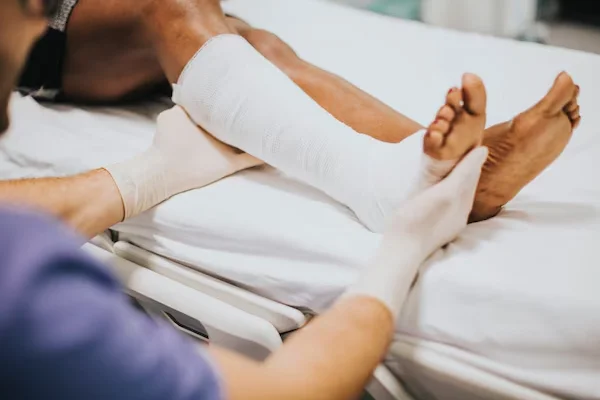
Stable fractures may sometimes be treated with a cast, splint, or brace to keep the affected area protected while the bone heals.
If a fracture is displaced but can be realigned without surgery, a procedure known as closed reduction may be considered. The bone is carefully repositioned and then immobilised to support healing.
Some fractures require surgery, particularly when the bone is significantly displaced, unstable, or associated with complex injuries. Surgical fixation may involve plates, screws, rods, or other orthopaedic implants to maintain alignment during healing.
The decision for surgery is made after evaluating the specific injury and the patient's overall condition.
Trauma can affect more than just the bone. Accidents and high-impact injuries may also involve joints, muscles, ligaments, tendons, nerves, or blood vessels.
Orthopaedic trauma assessment focuses on identifying the extent of the injury and determining appropriate treatment. Depending on the nature of the trauma, patients may require imaging, immobilisation, surgical treatment, or rehabilitation.
Early and appropriate management can help reduce complications and support recovery.
Fracture healing takes time and varies according to the bone involved, fracture type, age, overall health, and treatment method.
During recovery, patients may be advised to:
Gradual restoration of movement and strength is an important part of recovery after immobilisation or surgery.
Patients looking for fracture treatment in Uttam Nagar can consult Dr. Ranjeev Joshi for evaluation and personalised treatment guidance.
His approach focuses on understanding the injury thoroughly before deciding on a treatment plan. Depending on the fracture, patients may be guided toward conservative treatment, immobilisation, rehabilitation, or surgical management when required.
The clinic serves patients from Uttam Nagar and nearby areas including Dwarka, Janakpuri, Vikaspuri, Tilak Nagar, and other parts of West Delhi.
You should seek prompt medical evaluation after an injury if you experience:
If there is severe bleeding, loss of sensation, or a serious accident, emergency medical services may be required before routine orthopaedic consultation.
A physical examination and medical history are combined with imaging, most commonly an X-ray. Additional imaging may be recommended for selected complex injuries.
No. Many fractures can be treated with immobilisation or other non-surgical methods. Surgery is considered when the fracture characteristics make operative fixation appropriate.
Healing time varies depending on the bone, fracture type, severity, treatment, and individual health factors. Your orthopaedic specialist can provide more specific guidance after evaluating the injury.
This depends on the location and severity of the fracture and the treatment provided. Weight-bearing should only be done according to medical advice.
Physiotherapy may be recommended after immobilisation or surgery to help restore movement, strength, flexibility, and function.
A fracture can affect mobility and daily life, but appropriate diagnosis and treatment can support the healing process. Dr. Ranjeev Joshi provides fracture management and orthopaedic trauma care in Uttam Nagar, Delhi, with treatment planned according to each patient's injury and individual requirements.
If you have sustained a fracture or orthopaedic injury, schedule a consultation for proper evaluation and guidance on the next steps in your recovery.


Write a Reply or Comment